Timeless Indian Designer Dresses for Weddings Worldwide
One of the most common mistakes people make while shopping for wedding season is choosing every outfit in isolation.
A lehenga is purchased for the wedding ceremony. Another outfit is selected for a daytime event. Something else is added later for the reception. By the time the celebrations arrive, the wardrobe may contain beautiful pieces, but they often compete with one another rather than work together.
The strongest wedding wardrobes are rarely built this way.
Whether you are the bride, a family member or attending multiple celebrations throughout the season, the goal is not simply to collect outfits. It is to create a wardrobe where each look serves a distinct purpose while contributing to a cohesive overall style story.
This is where Indian Designer Dresses for Weddings offer a significant advantage. With a wide range of silhouettes, embroidery techniques, colour palettes and craft traditions, they allow women to dress appropriately for different wedding moments without looking repetitive from one event to the next.
A well-planned lehenga wardrobe should feel intentional. The daytime look should not compete with the wedding ensemble. The reception outfit should offer a different visual impact from the ceremony attire. Each piece should have its own identity.
Start with the Function
Many people begin wedding shopping by selecting their favourite outfit first and then trying to fit it into an occasion. A more effective approach is to work in reverse.
Every wedding function carries a different mood. Daytime celebrations tend to be lighter and more relaxed. Wedding ceremonies often require a stronger sense of occasion. Receptions and evening events allow for greater drama and embellishment.
Once the purpose of each event is clear, choosing the right Indian Designer Dresses for Weddings becomes significantly easier.
The objective is not to have five versions of the same look. It is to create distinction across every appearance.
Build Variety Through Colour

One of the simplest ways to create a balanced wardrobe is through colour planning.
If every outfit falls within the same palette, photographs from different functions can begin to look repetitive. Instead, consider introducing a progression of colours throughout the celebrations.
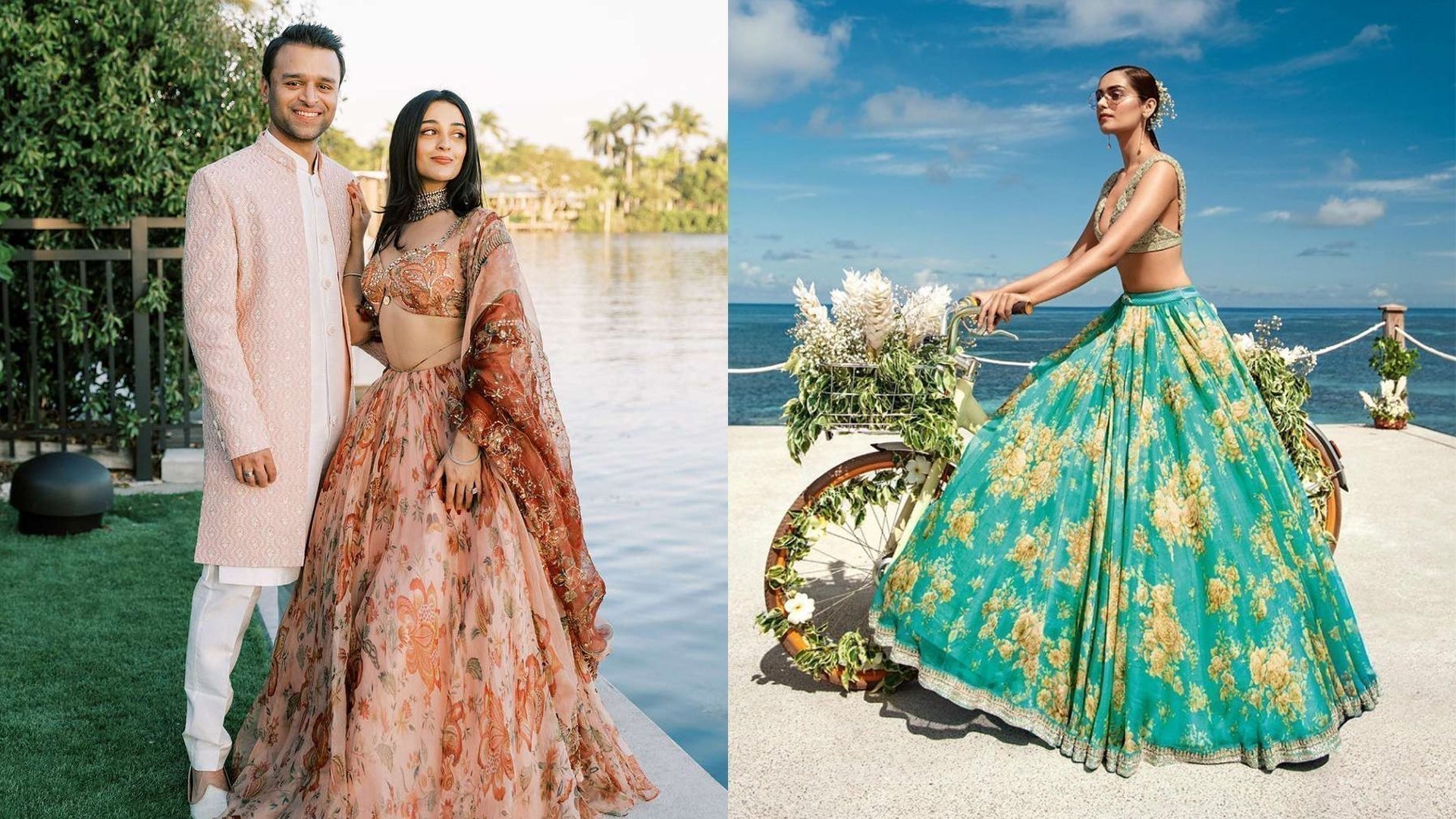
For daytime events, the Golden Light Floral Printed Lehenga with Dupatta offers an ideal starting point. Crafted in Chanderi with floral motif prints and embroidered borders, the magenta and teal palette feels vibrant, festive and appropriate for pre-wedding celebrations. The hand-embroidered blouse with glass bead accents adds refinement without making the ensemble feel overly formal.
This type of outfit introduces colour and energy while leaving room for more elaborate looks later in the wedding calendar.
Balance Prints and Embroidery

A common mistake when building a wedding wardrobe is relying entirely on heavily embroidered ensembles.
While embroidery remains central to luxury occasion wear, incorporating printed pieces creates visual variation and allows each outfit to have a distinct personality.
The Golden Light Printed Lehenga Set demonstrates this balance beautifully. Crafted in Chanderi and highlighted with Swarovski crystals and beadwork, the ensemble combines the richness of occasionwear with the ease of a print-led design.
Including both printed and embroidered looks within a wardrobe prevents every outfit from feeling visually similar. It also creates a more thoughtful progression across multiple events.
When selecting Indian Designer Dresses for Weddings, variation in surface detailing can be just as important as variation in silhouette.
Save the Strongest Statement for the Wedding Ceremony

Not every outfit should compete for attention.
The wedding ceremony is often the emotional and visual centre of the celebration. This is where craftsmanship, heritage techniques and traditional colour stories naturally take precedence.
The Ever Bloom Kalidar Embroidered Lehenga is a strong example of a ceremony-focused ensemble. Crafted in red tulle and detailed with sequins, zari and French knots, it carries the richness and significance associated with wedding dressing.
Paired with a complementing blouse, handloom dupatta, drape and veil, the ensemble creates presence without relying on excess. The craftsmanship becomes the defining feature rather than sheer volume or ornamentation.
This is often the role of the wedding outfit within a wardrobe, to anchor the entire story.
Introduce Contrast Through a Second Signature Look

Many modern wedding wardrobes include more than one major statement ensemble.
This may be for a reception, a second ceremony or an important family celebration. In these cases, contrast becomes essential.
The Ever Bloom Aari Embroidered Kalidar Lehenga offers a distinctly different mood from traditional bridal red. Crafted in blush-toned tulle and adorned with crystals, pearls, sequins and thread work, it demonstrates how colour alone can transform the character of an outfit.
The intricate Aari embroidery creates depth and detail, while the softer palette introduces balance within the wardrobe.
When building a collection of Indian Designer Dresses for Weddings, contrasting colour stories often create stronger overall visual impact than selecting similar looks repeatedly.
End on a High Note

The final major celebration often calls for the most elevated interpretation of occasion dressing.
This is where artistic craftsmanship, intricate embellishment and couture-level detailing can take centre stage.
The Quintessence Signature Pichwai Embellished Lehenga fulfils this role effortlessly. Featuring zardozi, Kashida embroidery, thread work, crystals and a crystal-encrusted drape, the ensemble reflects the depth of Indian artisanal traditions.
The powder blue colour introduces another dimension to the wardrobe, ensuring that each significant event is represented by its own distinct visual identity.
Rather than repeating familiar bridal codes, this look allows the wardrobe to evolve as the celebrations progress.
Think Beyond Individual Outfits
The most successful wedding wardrobes are rarely defined by a single purchase.
They are built through a combination of decisions that work together:
- Mixing prints with embroidery
- Varying colour palettes across functions
- Choosing different silhouette categories
- Introducing multiple craft techniques
- Creating a clear hierarchy of statement pieces
These considerations help ensure that every outfit serves a purpose.
Wedding photographs, videos and family albums preserve every outfit long after the celebrations have ended.
A thoughtfully planned wardrobe creates distinction between these memories. Each event feels unique. Each outfit contributes something different. Most importantly, every look feels appropriate to its moment.
This is why investing in Indian Designer Dresses for Weddings is about more than selecting beautiful garments. It is about understanding how individual pieces work together to create a complete wedding story.
Conclusion
Building a multi-function wedding wardrobe requires a different mindset from traditional occasion shopping. Instead of approaching each event separately, it encourages a more considered approach where colour, craftsmanship, silhouette and occasion all work together.
The result is a wardrobe that feels cohesive without becoming repetitive, elevated without feeling excessive and timeless enough to remain relevant long after the wedding season has passed. Through carefully selected Indian Designer Dresses for Weddings by Tarun Tahiliani, every function becomes an opportunity to present a different expression of personal style while remaining connected to a larger narrative.
FAQs
1. How many outfits do I need for an Indian wedding?
Most Indian weddings require separate outfits for pre-wedding events, the ceremony, reception and other celebrations.
2. What colours are best for Indian wedding outfits?
Jewel tones, reds, pastels, golds and festive hues work well depending on the function and timing.
3. Can I wear the same lehenga for multiple wedding functions?
Yes, styling it differently with new blouses, dupattas, jewellery or drapes can create distinct looks.
4. What are the most popular Indian Designer Dresses for Weddings?
Lehengas, sarees, Anarkalis, sharara sets and contemporary draped silhouettes remain popular wedding wardrobe choices.
5. How early should I start shopping for wedding outfits?
Begin shopping at least three to six months before the wedding for fittings, alterations, and customization.