What Makes a Garment Couture? Understanding the Art of Indian Couture
Couture is built through a process of precision. It begins long before the finished garment is seen. A design is developed, fabrics are selected, proportions are considered and every element is refined through a process where craftsmanship and construction are given equal importance.
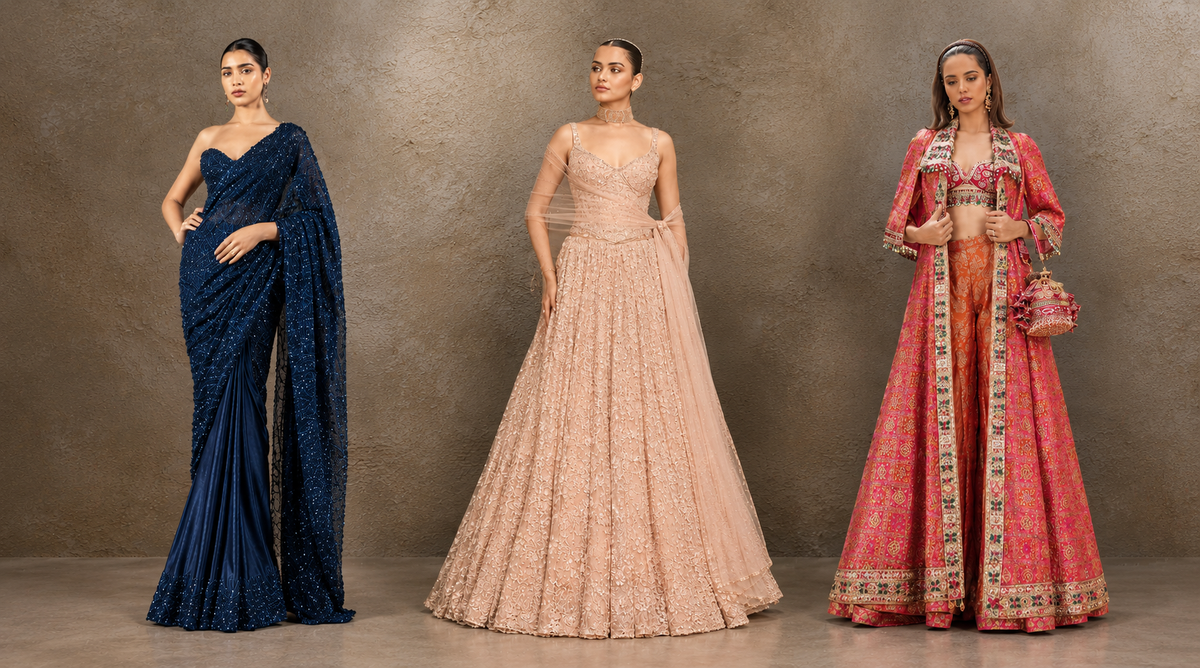
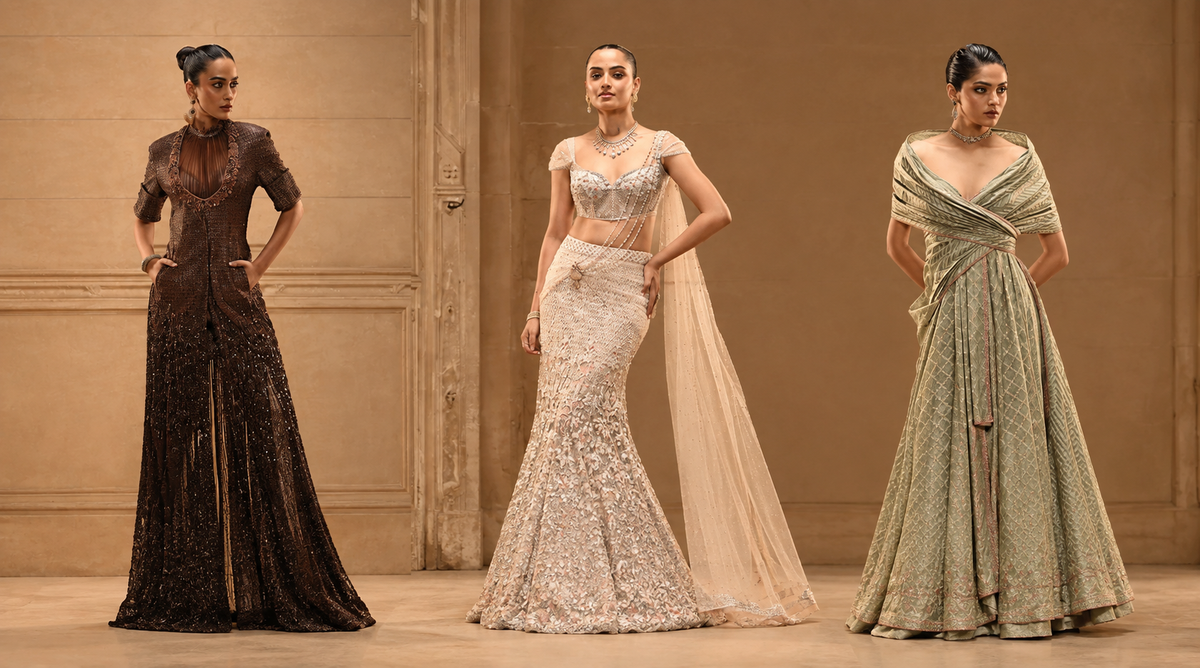
In Indian fashion, this approach has created a distinctive vocabulary of couture, bringing together intricate embroidery, considered draping, sculptural construction and techniques that have been developed and refined over generations.
The result is not defined by the amount of embellishment on a garment. It is defined by the thought, skill and time invested in making it.
Where Does Indian Couture Begin?

The making of a couture garment begins with the design itself. Rather than working within a fixed template, the silhouette can evolve according to the fabric, the intended movement and the way the garment is expected to be worn. A lehenga, saree, gown or structured ensemble may undergo several stages of development before its final form is established.
Measurements and fittings become part of this process. Proportions are refined, the fall of the fabric is assessed and construction is adjusted where required.
This is particularly important for garments that combine multiple elements. A blouse, skirt and drape must work together in proportion, while the placement of embroidery needs to follow the architecture of the silhouette.
Couture, therefore, is not simply about creating a garment in a particular size. It is about developing the garment itself with precision.
Why Craftsmanship Defines the Garment

The distinction of couture is often found in the work that takes place beneath the surface.
Hand embroidery can involve hundreds of hours of work, with artisans developing intricate motifs one stitch at a time. Zardozi, aari, resham, dabka, gota, cutdana, crystals and other techniques can be brought together to create varying degrees of texture and dimension.
But craftsmanship is not about using every technique available.
The placement, density and scale of embroidery are carefully considered according to the garment. A border may be developed to define the movement of a lehenga. A blouse may carry concentrated embroidery while the skirt is allowed more space. A motif may be enlarged or reduced to maintain the proportions of the silhouette.
This precision is what allows traditional craftsmanship to become part of contemporary design rather than simply being applied as decoration.
How Does Fabric Shape Couture?

Fabric determines much of what a garment eventually becomes.
A fluid textile can create movement through a drape, while a structured fabric can hold a sculptural silhouette. Sheer layers can introduce transparency and depth, while heavier textiles can provide the foundation for intricate surface work.
The relationship between fabric and embroidery is equally important. Handwork adds weight to a garment, and the base textile needs to support it without compromising its fall or movement.
This is why fabric selection is considered at the beginning of the design process. It influences the silhouette, the construction and even the way embroidery will be developed.
The fabric does not simply carry the design. It is part of the design.
What Happens During the Fitting Process?
Fittings are an essential part of couture because they allow the garment to be refined as it takes shape.
The first fitting establishes the basic proportions. Further fittings allow details such as the neckline, shoulder, waist placement, sleeve, length and overall fall to be adjusted.
For a lehenga, this can mean refining the position of the waistband and the volume of the skirt. For a saree or draped garment, it can involve adjusting the placement and fall of different layers. In a structured blouse, even a small alteration can change the way the entire ensemble sits.
These refinements may not be immediately visible when looking at the finished garment. They are, however, responsible for much of its precision.
What Makes Hand Embroidery Different?
Hand embroidery carries a quality that comes from the process itself.
Unlike work produced through a completely standardised mechanical process, hand embroidery develops gradually. The artisan controls the tension, placement and rhythm of every stitch, allowing the technique to respond to the fabric and the design.
This also explains why traditional techniques remain relevant within contemporary couture. Their value is not simply historical. They offer a depth of texture and variation that can be integrated into new silhouettes and modern compositions.
The role of the artisan is therefore central. Design establishes the direction, but craftsmanship gives the garment its final character.
Why Construction Matters as Much as Embroidery
A garment can carry exceptional embroidery and still fall short if its construction has not been considered with the same level of attention.
The internal structure determines how the garment sits on the body. Linings, interlinings, support, seam finishing and closures all contribute to the final result.
This becomes especially important when working with elaborate embroidery. Additional weight needs to be supported correctly, while the garment still needs to retain movement and comfort.
In a well-constructed couture garment, these elements work quietly in the background. The intention is not for construction to announce itself, but for the finished silhouette to appear balanced and precise.
What Should You Look for in a Couture Garment?
The quality of a couture garment is best understood by looking beyond its surface.
Look at the silhouette. The proportions should feel deliberate, with each component working in relation to the next.
Look at the embroidery. Examine the placement, density and consistency of the handwork rather than simply the quantity of embellishment.
Look at the fabric. It should support the construction and allow the garment to move as intended.
Look at the finishing. Seams, linings, closures and internal construction should receive the same consideration as the visible surface.
Look at the process. Multiple fittings, specialised craftsmanship and time invested in development are fundamental to the couture approach.
These details reveal the work that has gone into the garment far more clearly than embellishment alone.
The Making of Something Exceptional
Couture is ultimately an exercise in discipline.
It requires time to develop the silhouette, skill to execute the craftsmanship and precision to bring every element together. The most exceptional garments do not rely on excess to make an impression. Their distinction comes from how successfully fabric, form, embroidery and construction have been brought together.
For Tarun Tahiliani, this approach has always been rooted in the relationship between Indian craft and contemporary design. Traditional techniques are given new dimensions through drape, structure and movement, while every detail is considered as part of the larger garment.
That is what gives couture its enduring relevance. Not simply the hours invested in making a garment, but the thought behind each one.
Frequently Asked Questions
1. What is Indian bridal couture?
Indian bridal couture refers to highly crafted, made-to-order wedding garments developed through personalised fittings, detailed construction, hand embroidery and careful consideration of fabric, silhouette and finishing.
2. What makes Indian bridal couture different from regular bridal wear?
The difference lies in the making. Couture involves greater attention to individual fit, craftsmanship, construction, fabric selection, embroidery placement and finishing than standard bridal collections.
3. Why is couture so expensive?
Couture involves significant artisan hours, specialised handwork, premium fabrics, multiple fittings and detailed construction. The cost reflects the time, skill, materials, and precision invested in the garment.
4. How long does it take to make a couture wedding outfit?
The timeline depends on the silhouette, embroidery, fabric and level of customisation. Elaborately handcrafted garments can require several weeks or months from initial design to completion.
5. Is couture only about heavy embroidery?
No. Couture is defined by the overall making of a garment. Silhouette, construction, draping, fabric, fit, craftsmanship and finishing are equally important to the final result.