What Is Kashida Embroidery? Exploring the Heritage and Craftsmanship of Kashmir
Indian embroidery traditions are celebrated for their intricate patterns, regional influences and skilled craftsmanship. Among them, Kashida embroidery stands out for its connection to Kashmir's textile heritage and its inspiration from the region's natural surroundings. From floral patterns and delicate leaves to flowing vines and intricate decorative motifs, this craft brings texture and artistic detail to fabric.
Also known as Kashmiri embroidery or Kashidakari, Kashida is traditionally associated with embroidered shawls, regional garments and other textiles. Its designs draw inspiration from flowers, foliage, birds and other elements of nature. Depending on the technique, the embroidery may feature fine needlework or chain-like stitches that create distinctive patterns.
For those interested in exploring this traditional craft through contemporary Indian couture, Kashida Embroidery features in selected designs by Tarun Tahiliani, where Kashida detailing is combined with other embroidery techniques and embellishments. From Pichwai-inspired lehengas to floral and hand-painted designs, these creations demonstrate how traditional textile influences can be incorporated into modern occasion wear.
What Is Kashida Embroidery?
Kashida embroidery is a traditional form of embroidery associated with Kashmir, India. The craft is known for decorative patterns inspired by the natural landscape, including flowers, leaves, branches, birds and fruit. Depending on the style, the designs can appear delicate and understated or richly detailed across a larger area of fabric.
Traditional Kashmiri hand embroidery uses different stitches and techniques to create these patterns. Artisans may work with materials such as cotton, wool or silk, using embroidery threads suited to the fabric and the intended design. The result can range from fine, detailed motifs to flowing patterns that cover a larger section of a textile.
Although Kashida is strongly associated with Kashmiri shawls and garments, its visual language can also inspire contemporary clothing. In designer fashion, Kashida work may appear alongside other forms of embroidery, surface embellishment and decorative detailing, creating a layered look that connects traditional craft with modern design.
The History of Kashida Embroidery
The history of Kashida embroidery is closely connected to Kashmir's longstanding textile and craft traditions. Educational material on Kashmiri embroidery traces the craft's development back several centuries, with its textile industry gaining wider prominence during the Mughal period.
The region's natural surroundings have long influenced its decorative vocabulary. Flowers, leaves, vines and birds appear in many traditional Kashmiri embroidery designs, reflecting the landscape and the artistic traditions of the region. The cypress cone, almond, chinar leaf and lotus are among the motifs associated with Kashmiri textiles.
Kashida became particularly associated with shawls and regional garments, where embroidery could enhance the fabric through borders, repeating motifs or more elaborate compositions. Over time, Kashmiri embroidery has also been used on other garments, accessories and home textiles.
Today, Kashida remains an important reference point for designers interested in Indian textile heritage. Its nature-inspired motifs and varied embroidery techniques offer opportunities to reinterpret traditional detailing for contemporary clothing, including occasion wear and couture.
What Makes Kashmiri Embroidery Unique?
Kashmiri embroidery is recognised for its relationship with nature, its range of stitching techniques and the detail created through skilled needlework. Several characteristics distinguish the craft.
1. Nature-Inspired Motifs
Many Kashida embroidery motifs draw from the natural world. Flowers, leaves, branches, fruit and birds are common sources of inspiration. These elements can be arranged as individual motifs, flowing vines, borders or repeating patterns.
2. Different Stitching Techniques
Kashmiri embroidery includes several techniques, such as Sozni needlework and Aari or hook-based embroidery. These methods produce different visual effects, from fine and delicate details to flowing chain-stitch patterns.
3. Versatility Across Textiles
Traditional Kashida work is associated with shawls and regional garments, but Kashmiri embroidery techniques are also used on dress materials, jackets, accessories and home textiles. The choice of fabric and stitch influences the appearance of the finished design.
4. A Balance of Detail and Pattern
The visual character of Kashida comes from how motifs are arranged and stitched onto the fabric. Some designs use small, detailed elements, while others create a more flowing composition. This versatility allows the craft to work across different garment styles and design approaches.
Popular Kashida Embroidery Motifs and Designs
Kashida embroidery motifs are often inspired by Kashmir's flora and fauna. Their placement, scale and arrangement can change the overall appearance of an embroidered textile.
|
Motif |
Design characteristics |
Where it can work |
|
Chinar leaf |
A distinctive leaf-inspired pattern associated with Kashmiri textiles |
Borders, panels and larger decorative compositions |
|
Floral motifs |
Flowers arranged individually or in repeating patterns |
Lehengas, dupattas, shawls and occasionwear |
|
Cypress-inspired forms |
Tall, tapering botanical shapes |
Elongated patterns and decorative textile layouts |
|
Almond and fruit motifs |
Small, nature-inspired decorative elements |
Repeating patterns and detailed embroidery |
|
Vines and foliage |
Flowing stems, leaves and connected botanical forms |
Borders, panels and all-over designs |
|
Bird motifs |
Decorative representations of birds |
Selective accents and nature-inspired compositions |
These motifs can be used individually or combined to create more elaborate patterns. In contemporary designer clothing, they may also be paired with other decorative elements to create a more layered visual effect.
Understanding Kashida Embroidery Stitches
Kashida is not defined by a single stitch. Different forms of Kashmiri embroidery use different methods depending on the fabric, design and level of detail required.
Chain Stitch
Kashmiri chain-stitch embroidery is associated with Aari or hook-based work, in which a hooked needle creates a series of connected loops. This technique can be used to form flowing outlines and decorative patterns. Hook-based chain stitch is also associated with the Kashmiri style known as Zalakdozi.
Darning Stitch
Darning stitch can be used to fill areas of a motif or create textured patterns. In Kashmiri embroidery, it is one of the techniques used to build decorative designs on fabric.
Stem Stitch
Stem stitch is useful for outlining motifs and defining the lines of floral or botanical patterns. It can help give leaves, stems and other decorative elements a clearer shape.
Satin Stitch
Satin stitch is another technique used in Kashmiri embroidery. It can create filled areas and smooth decorative sections within a design. The precise technique varies according to the style of embroidery being practised.
It is important to distinguish these traditional techniques from other embellishments used in designer clothing. Zardozi, crystals, beads and other surface details may complement Kashida embroidery in a garment, but they are not all Kashida stitches.
Kashida Embroidery in Contemporary Indian Couture
Traditional embroidery can take on a different character when incorporated into contemporary couture. Designers may retain the visual influence of Kashida motifs while combining them with other forms of needlework, embellishment, fabric layering and modern garment silhouettes.
In occasion wear, Kashida-inspired detailing can appear on lehengas, blouses, dupattas and veils. The embroidery may be used as part of a larger decorative composition rather than as the only technique on the garment. This allows traditional motifs to sit alongside crystals, threadwork, metallic embellishments and other surface details.
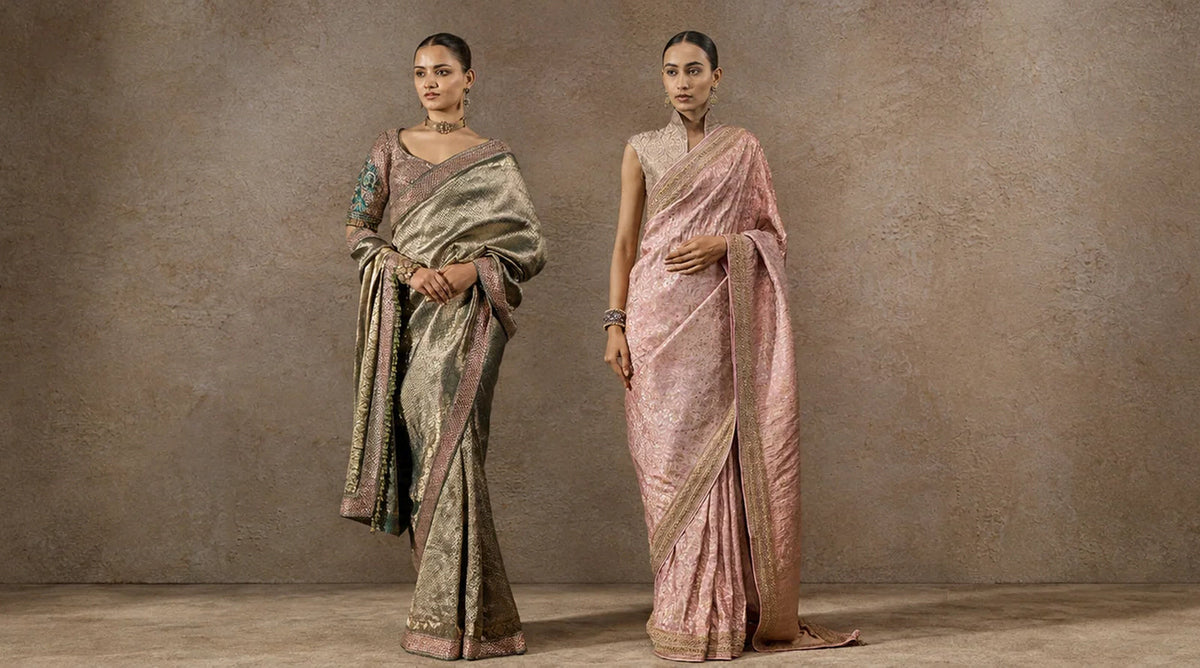
A Kashida embroidery saree, for example, can draw attention to decorative borders or motifs placed across the fabric. Similarly, a Kashmiri embroidery shawl may use floral patterns and delicate needlework to enhance the textile. These examples illustrate the broader versatility of Kashmiri embroidery; the exact techniques and materials depend on the individual piece.
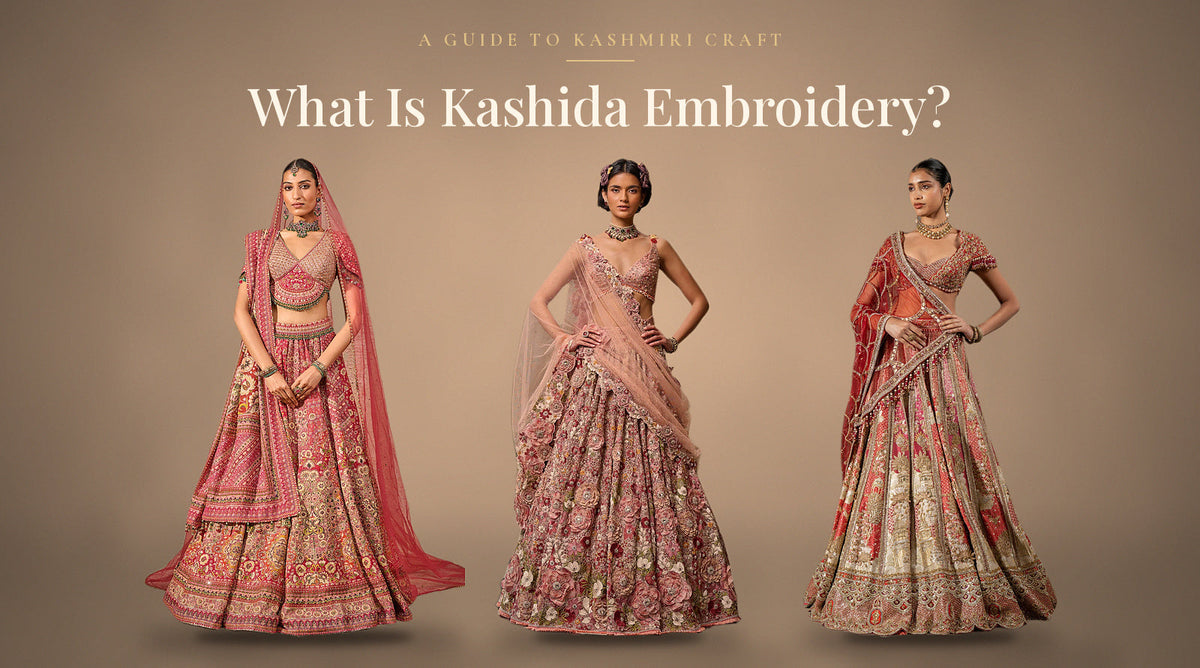
Tarun Tahiliani's Kashida-inspired designs offer examples of this contemporary approach, with selected lehengas combining Kashida detailing with other embroidery and embellishment techniques.
Tarun Tahiliani Designs Featuring Kashida Embroidery
The following designs demonstrate different ways Kashida appears in contemporary occasionwear. Each product has its own combination of fabrics, colours and decorative techniques, so the product details are useful when comparing styles.
1. Quintessence Signature Pichwai Embellished Lehenga

The Quintessence Signature Pichwai Embellished Lehenga combines Kashida with Zardozi, crystals and threadwork. The red-toned lehenga is paired with a complementing embroidered blouse, a hand-embroidered dupatta and a crystal-encrusted drape.
Its combination of embroidery and embellishment makes it an option for those looking for a richly detailed ensemble for a formal occasion.
Product details:
-
Materials: Silk Dupion and Tulle
-
Colour: Shades of red
-
Included: Blouse, dupatta, lehenga and veil
-
Care: Dry-clean only
2. Quintessence Floral Embroidered Lehenga

The Quintessence Floral Embroidered Lehenga combines Kashida and Gara with 3D embellishments, crystals, Swarovski elements and French knots. The multicoloured lehenga is paired with a hand-embroidered blouse and a floral-embroidered dupatta.
The mix of floral detailing and varied embellishment techniques creates a layered look that brings together several decorative traditions.
Product details:
-
Materials: Tulle and Sheer Silk
-
Colour: Multicoloured
-
Included: Blouse, dupatta and lehenga
-
Care: Dry-clean only
3. Ever Bloom Pichwai Embellished Lehenga

The Ever Bloom Pichwai Embellished Lehenga features Kashida, Zardozi, crystals and threadwork. The gold-coloured ensemble includes an embroidered blouse, dupatta and veil, creating a coordinated look for formal celebrations.
Its combination of traditional embroidery references and crystal detailing makes it worth considering for those who prefer a gold-toned occasionwear ensemble.
Product details:
-
Material: Silk Dupion
-
Colour: Gold
-
Included: Blouse, drape, dupatta, lehenga and veil
-
Care: Dry-clean only
4. Ever Bloom Byzantium Painted Kashida Lehenga

The Ever Bloom Byzantium Painted Kashida Lehenga features hand-painted Kashida detailing complemented by jewel stones and crystals. The wine-coloured lehenga is paired with a matching blouse and silk dupatta.
The hand-painted treatment offers a different interpretation of Kashida-inspired design, bringing together decorative artwork and embellishment.
Product details:
-
Material: Silk Dupion
-
Colour: Wine
-
Included: Blouse, dupatta and lehenga
-
Care: Dry-clean only
5. Kashida Embroidered Lehenga

The Kashida Embroidered Lehenga features a multipanel design highlighted with French knots, zari and kundan. It is paired with an embellished blouse, a thread-embroidered dupatta and a floral-detailed veil.
Its combination of different decorative elements makes it an option for those who appreciate detailed surface work and a multicoloured palette.
Product details:
-
Blouse: Silk Dupion
-
Dupatta: Tissue Georgette
-
Lehenga: Kasab Linen
-
Veil: Indian Tulle
-
Colour: Multicoloured
-
Included: Blouse, dupatta, lehenga and veil
-
Care: Dry-clean only
6. Timeless Kashida Embroidered Bridal Lehenga

The Timeless Kashida Embroidered Bridal Lehenga combines Kashida detailing with sequin, crystal and bead embellishments. The multicoloured ensemble includes a complementing blouse, an embroidered dupatta and a delicate veil.
The coordinated components make this design an option for brides looking for a detailed lehenga ensemble with several layers of embellishment.
Product details:
-
Blouse: Silk Dupion
-
Dupatta: Georgette
-
Lehenga: Silk Dupion
-
Veil: Tulle
-
Colour: Multicoloured
-
Included: Blouse, dupatta, lehenga and veil
-
Care: Dry-clean only
How to Choose a Kashida-Inspired Outfit
When selecting a Kashida-inspired ensemble, consider how the embroidery, fabric and overall design work together. These details can help you identify an outfit that suits the occasion and your preferred style.
|
Factor |
What to consider |
|
Embroidery style |
Decide whether you prefer floral motifs, hand-painted detailing or a combination of embroidery techniques. |
|
Colour palette |
Choose colours that suit the occasion and coordinate with the other elements of your look. |
|
Fabric |
Review the listed materials to understand the fabric composition and the care required. |
|
Embellishment |
Consider how Kashida works alongside crystals, zari, beads or other decorative details. |
|
Outfit components |
Check whether the ensemble includes the blouse, dupatta, veil or other listed pieces. |
|
Garment care |
Follow the product's care instructions; the six featured lehengas specify dry-clean-only care. |
For bridal and formal occasion wear, it is also useful to review the complete product description before ordering. This helps you understand the included components, materials and care requirements rather than relying on the design name alone.
Kashida Embroidery vs Other Embroidery Techniques
Kashida often appears alongside other embroidery techniques in contemporary fashion. Understanding their differences helps explain how designers combine different forms of decoration in a single garment.
|
Technique |
General characteristics |
How it may complement Kashida |
|
Kashida |
Kashmiri embroidery associated with nature-inspired motifs and varied stitching techniques |
Provides floral, botanical and other traditional decorative patterns |
|
Aari work |
Hook-based embroidery often associated with chain stitch |
Creates flowing outlines and decorative patterns |
|
Zardozi |
Metallic-thread embroidery traditionally associated with raised, ornate detailing |
Adds a metallic and dimensional element |
|
Gara embroidery |
A decorative embroidery tradition associated with Parsi textiles, often featuring detailed motifs |
Introduces another textile-art influence alongside Kashida |
|
French knots |
Small raised knots made with thread |
Add texture and fine surface details |
|
Zari work |
Decorative work using metallic thread |
Introduces metallic accents and highlights |
These techniques are not interchangeable, and the exact materials and methods vary. A garment that combines Kashida with Zardozi, Gara, crystals or French knots brings together distinct forms of decoration to create its overall design.
Caring for Kashida-Embroidered Designer Wear
Embroidered garments require appropriate care to help protect their fabric and decorative details. The correct method depends on the materials, embroidery and embellishments used.
For the six Tarun Tahiliani lehengas featured in this guide, the listed care instruction is dry-clean only. Follow the instructions provided with the individual garment rather than attempting home washing.
A few general precautions can also help when storing occasion wear:
-
Store the garment in a clean, dry place.
-
Avoid placing heavy objects on embroidered sections.
-
Keep embellishments from snagging against rough surfaces or other garments.
-
Follow the product-specific care instructions for the fabric and decorative elements.
For garments featuring crystals, beads, metallic details or multiple fabric types, professional care is especially important.
Conclusion
Kashida embroidery reflects Kashmir's rich textile heritage through nature-inspired motifs, distinctive stitching techniques and detailed decorative patterns. From traditional Kashmiri shawls to contemporary couture, its visual influence continues to offer designers ways to connect regional craft with modern fashion.
Tarun Tahiliani selected Kashida-inspired lehengas illustrate how this embroidery can be combined with other techniques, including Zardozi, Gara, threadwork, crystals and hand-painted detailing. Whether you are interested in the history of Kashidakari or exploring designer occasionwear, understanding the craft can help you appreciate the detail behind each design.
Frequently Asked Questions
What is Kashida embroidery?
Kashida embroidery is a traditional embroidery style associated with Kashmir. It is known for nature-inspired motifs, including flowers, leaves, birds and vines, created using different stitching techniques.
What is the history of Kashida embroidery?
Kashida has a long history within Kashmir's textile traditions. Its development spans several centuries, and the region's embroidery and textile crafts gained wider prominence during the Mughal period.
What is Kashidakari?
Kashidakari is a term used for Kashida or Kashmiri embroidery work. It refers to decorative needlework associated with Kashmiri textiles and nature-inspired patterns.
What are common Kashida embroidery motifs?
Common motifs include flowers, chinar leaves, cypress-inspired forms, almonds, fruit, birds and flowing foliage. These may be arranged individually, in borders or in repeating patterns.
What stitches are used in Kashida embroidery?
Kashmiri embroidery uses several stitches, including chain stitch, darning stitch, stem stitch and satin stitch. The techniques used depend on the particular style and design.
Is Aari work used in Kashmiri embroidery?
Aari or hook-based embroidery is practised in Kashmir and is associated with chain-stitch patterns. It is one of the techniques used in Kashmiri embroidery, although Aari work is also practised in other regions of India.
Is Kashida embroidery used on sarees and shawls?
Yes. Kashmiri embroidery is traditionally associated with shawls and regional garments, and related techniques are used on different textiles and apparel. The materials and embroidery style depend on the individual piece.
What makes Kashida embroidery different from Zardozi?
Kashida is associated with Kashmiri embroidery and nature-inspired motifs, while Zardozi is known for metallic-thread embroidery and ornate detailing. Designers may combine both techniques in a single garment, but they are distinct crafts.
How should I care for Kashida-embroidered clothing?
Follow the care instructions on the product listing. The Tarun Tahiliani lehengas featured in this guide specify dry-clean-only care, so professional cleaning is recommended according to the garment's instructions.